
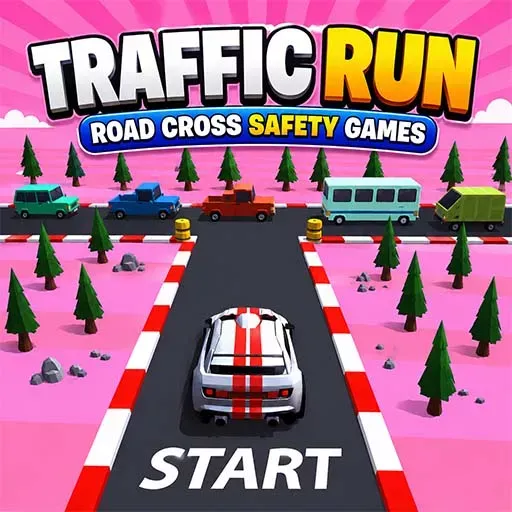
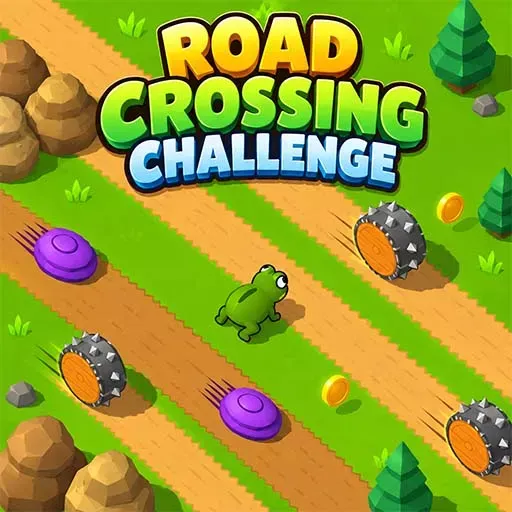
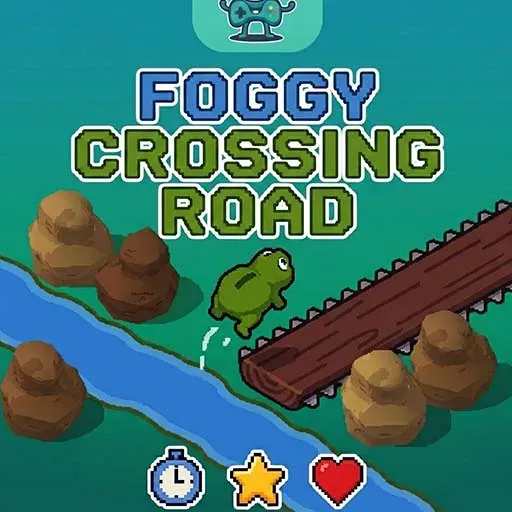
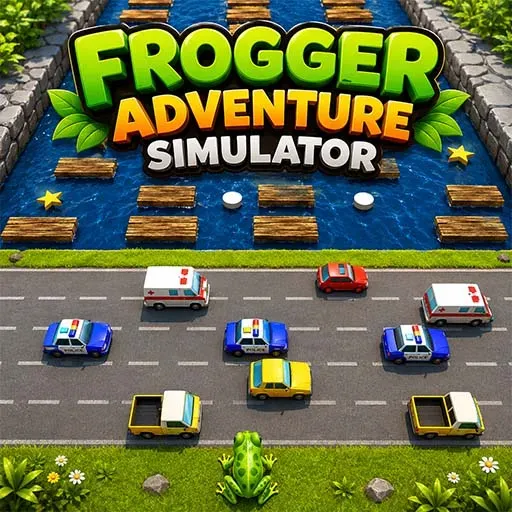
About Frogger style Games
A game based on the mechanics of Konami's 1981 arcade classic Frogger, guiding a character across multiple hazard zones by timing hops through gaps in moving traffic and navigating across moving platforms over water. The format combines two distinct challenge types: gap-timing through obstacles and platform-staying on moving surfaces.
What Made Frogger Different From Everything Else in 1981?
Space Invaders shot things. Pac-Man ate things. Frogger just wanted to get home. The arcade landscape in 1981 was dominated by combat metaphors. Shooting aliens. Eating ghosts. Destroying asteroids. Frogger had no weapon. No enemies that could be defeated. The only objective was navigation, moving a small frog across hazards that were indifferent rather than hostile. The cars were not trying to hit the frog. They were simply moving. The logs were not trying to help. They were simply floating. The world was not malevolent. It was indifferent. Getting through it required reading its patterns and timing movement accordingly.
That distinction, a world that does not care about the player, rather than one actively opposing them, created a different emotional context from every other arcade game of the era. Cashbox magazine reported in October 1981 that distributors found Frogger attracted women and non-gamers to arcades that had previously been dominated by young male players. The non-aggressive but challenging gameplay was the reason. It had no barriers of age or gender. Anyone could understand what needed to be done. Whether they could do it was the game.
The Two Hazard Zones — Road Then River
Crossing the road is one skill. Crossing the river is a completely different experience. The original Frogger screen divides into two distinct challenge types. The lower half is the road, with five lanes of traffic moving at different speeds in alternating directions. The player reads gaps between vehicles and time hops to move through them. The frog can move forward, backward, left, or right. Wrong timing means a vehicle hits the frog. The mechanic is reaction and gap-reading.
The upper half is the river, and the entire mechanism changes. The water is lethal. The frog cannot cross water directly. It must hop onto logs, turtles, and alligators that float across the screen. The challenge is no longer avoiding moving objects. The challenge is staying on moving objects while simultaneously planning the next hop. A log carries the frog off-screen if the player rides it for too long. Turtles periodically submerge and face instant death. Alligators allow riding on their backs but not on their heads.
Two completely different spatial challenges in the same game. Neither is the other. Both have to be solved to complete a crossing.
Free Frogger Style Games on Khelogy
All free. No payment. Open Khelogy, pick a Frogger-style game, and start hopping.
- Classic frog crossing games — road and river zones, timing-based hop mechanics, multiple frogs to guide home per level
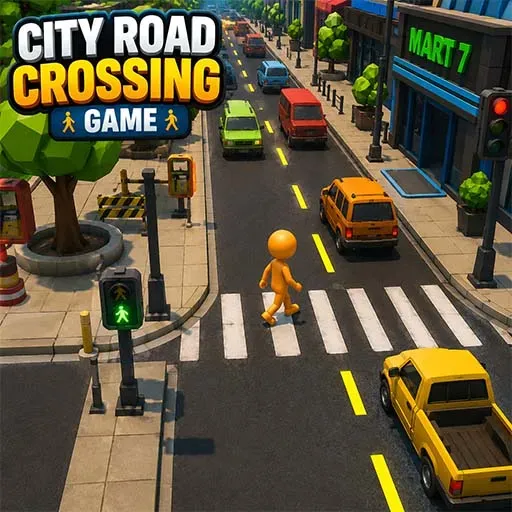
- Traffic crossing arcade games — road-only formats, varied vehicle speeds per lane, survival measured in distance or frogs safely home
- Endless crossing games — no defined endpoint, the crossings generate procedurally, survive as long as possible across increasing difficulty
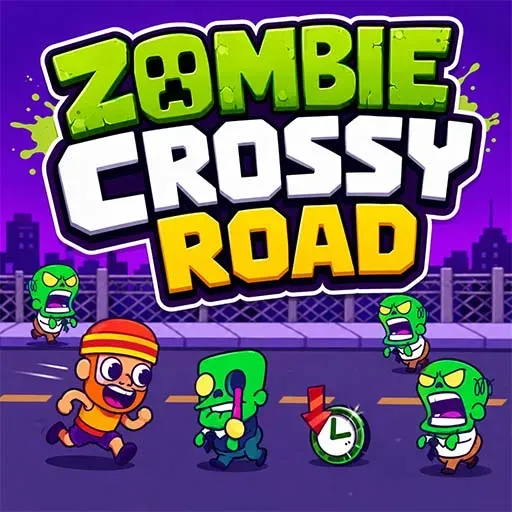
- Animal Crossing road games — different characters hopping on the same mechanic, themes ranging from chickens to turtles to modern cartoon animals
The Seinfeld Effect — When a Game Becomes Cultural Reference
Season nine. Episode 18. George Costanza finds a Frogger machine with his high score still intact. The 1998 Seinfeld episode titled The Frogger is one of the most famous single-episode references to a specific arcade game in television history. George discovers that a pizzeria still has the original Frogger cabinet with his name at the top. He buys the machine and attempts to transport it across a New York street, mimicking the game itself while keeping it plugged in to preserve the score. The episode required no explanation of what Frogger was. Audiences in 1998 understood immediately. The game had been out for seventeen years, and its cultural penetration was complete enough that a mainstream sitcom could build an entire episode around it with zero setup.
By 2005, the various home versions of Frogger had sold twenty million copies worldwide. The game had been ported to over twenty platforms. The mechanic was old enough to be nostalgic for adults who had played it as children. New enough that those children were encountering browser versions for the first time.
River Navigation — The Harder Half
Most players die in the river. Not the road. The road portion of Frogger-style games is the obvious challenge — cars are fast, lanes change direction, and timing is everything. Players practice the road instinctively. The river is more confusing because the rules are counterintuitive. The player is not avoiding things. The player is riding things. That conceptual flip from dodging to staying on takes longer to internalize.
Turtles' submerging is the specific mechanic that eliminates most new players. The turtle appears to be a safe platform. It is. Until it is not. The animation gives a warning that the turtle begins to sink before it disappears completely. Reading that animation and hopping off in time while another platform is within range is a compound timing challenge that the road section never requires. The road demands one decision at a time. The river demands two.
The Mechanics That Every Crossing Game Borrowed
Lane speed variation. Moving platforms. A timer that punishes waiting. Every crossing arcade game built since 1981 uses at least one of these three design elements from the original Frogger. Different lanes at different speeds create the gap-reading challenge. Moving platforms create the spatial tracking challenge. A timer in Frogger, waiting too long on the road causes vehicles to increase speed forces forward momentum and preventing the player from simply waiting for perfect conditions.
Crossy Road, in 2014, added the eagle mechanic, standing still too long, triggering a predator that ends the run. The mechanic is functionally identical to Frogger's speed increase timer. The design problem is the same. The player cannot simply wait. Hipster Whale understood that this was the core tension of the format and preserved it directly.
No Download. Opens in the Browser.
The browser opens. Road loads. Traffic is already moving. No app. No installer. Works on Chrome, Firefox, and Safari. Browser versions of Frogger-style games range from faithful HTML5 recreations of the 1981 original to modern interpretations with updated graphics and additional mechanics. Phone and tablet work naturally, tapping to hop on a touchscreen is as immediate as pressing a joystick.
Why Khelogy?
- No account. No download. Nothing between the player and the first crossing.
- Open Khelogy. Pick a Frogger-style game. Get the frog home.
- Over 1,000 free games. Loads in any browser. Works on phone, tablet, and desktop. New games are added regularly.
- Cross the road. Then the river.