

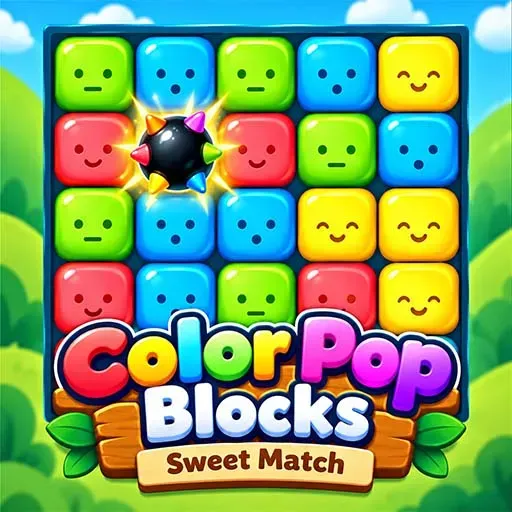
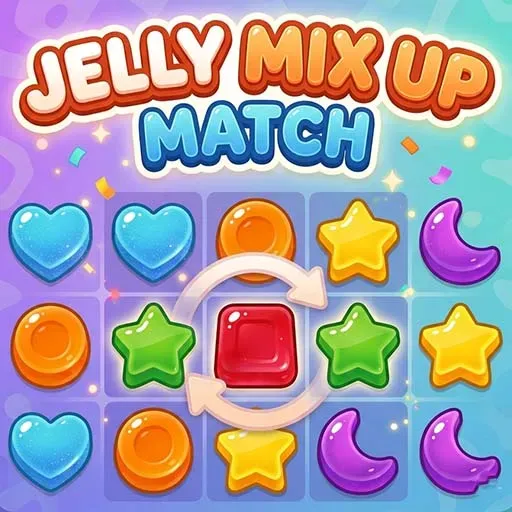
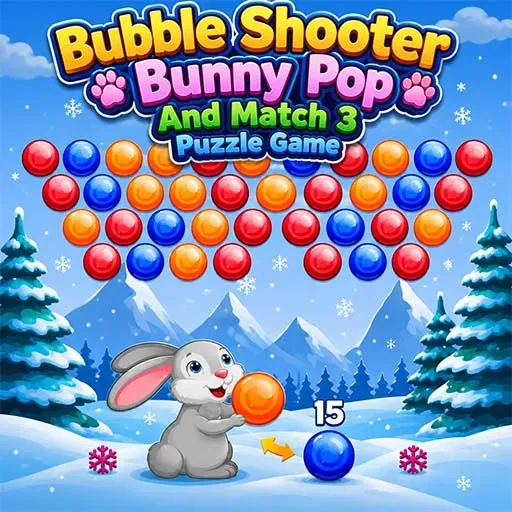
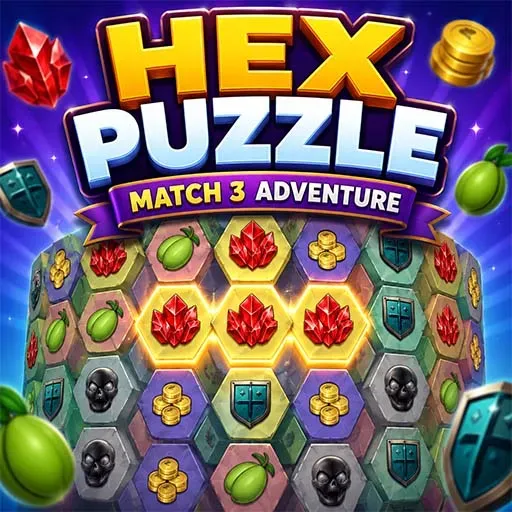
About Match puzzle Games
Match puzzle games deliver small wins in rapid succession — three tiles clear, a chain reaction fires, the level completes, and the next one loads before the satisfaction of the last one fades. That cycle runs faster than most players notice, which is why sessions intended to last five minutes regularly extend to an hour.
Khelogy has free match puzzle games covering classic jewel and gem formats, candy match games, fruit matching, tile connect games, triple match formats, color sorting matches, and pair memory matching. No download. No account. The first grid is already waiting.
Why Match 3 Games Are Impossible to Put Down
The dopamine cycle runs faster than the player realizes.
Match three games deliver small victories in rapid succession. Three candies clear — a small reward. A chain reaction fires — a bigger reward. A level completes — the biggest reward, immediately followed by the next level loading. The brain's reward center responds to each of these moments with a dopamine release. GamesRadar research into match-three psychology noted that the difficulty increases gradually enough that players rarely feel stuck for long, and the completion animations and sound effects are specifically designed to amplify that chemical response.
The format is also genuinely strategic beneath the surface simplicity. Matching four items instead of three creates a power-up. Matching five creates a more powerful one. Setting up chain reactions — where one cleared row causes tiles to fall and create another match automatically — is a skill that separates high scorers from casual players. Easy to start. Years to master. That gap is why the format has dominated casual gaming for over two decades.
Classic Match 3 Puzzle Games — The Core Format
Swap. Match. Clear. Repeat.
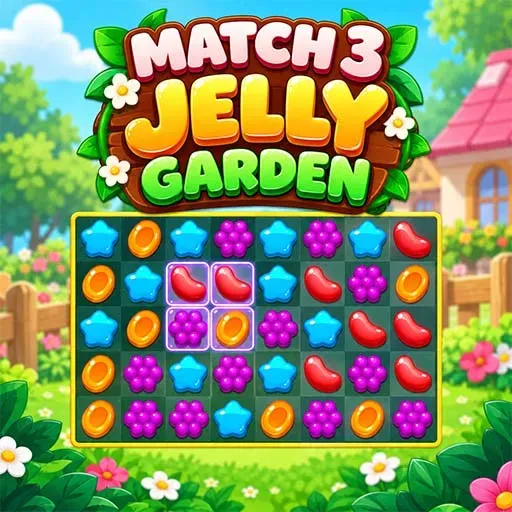
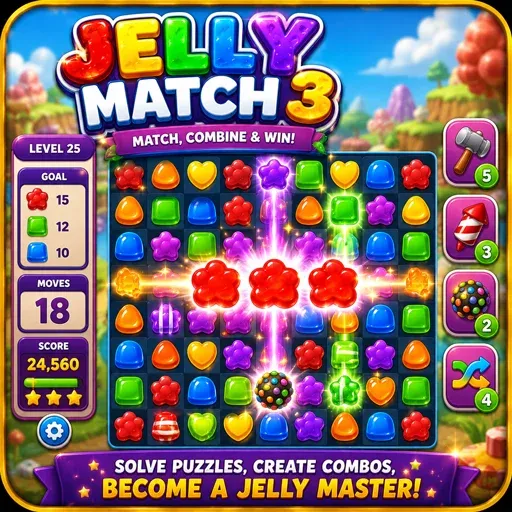
Classic match 3 puzzle games present a grid of colored tiles — gems, candies, fruits, objects — and ask the player to swap adjacent tiles to create rows or columns of three or more identical items. Matched tiles disappear. New tiles fall from above to fill the gaps. Falling tiles sometimes create additional matches without the player doing anything — those chain reactions are the most satisfying moment the format produces.
Bejeweled established this template in 2001 and remains one of the most recognized casual games ever made. PopCap built the game in three weeks. It has been downloaded over 150 million times across its various versions. The formula was essentially final in the first release — the decades of evolution since then have added themes, power-ups, and story layers without altering the core swap-and-match mechanic at all.
What is a match 3 puzzle game?
A puzzle game where players swap adjacent tiles on a grid to create rows or columns of three or more identical items. Matched tiles disappear, new tiles fall to replace them, and chain reactions can clear multiple groups in a single move. The goal varies by level — clearing a set number of tiles, reaching a score, or breaking specific obstacles on the board.
Free Match Puzzle Games on Khelogy
All free. No payment. Open Khelogy, pick a match puzzle game, start swapping.
- Classic jewel and gem match games — swap adjacent gems to match three or more, chain reactions score bonus points, levels increase in complexity
- Candy match puzzle games — colorful candy themes, power-up candies created by larger matches, obstacle tiles that require specific matches to clear
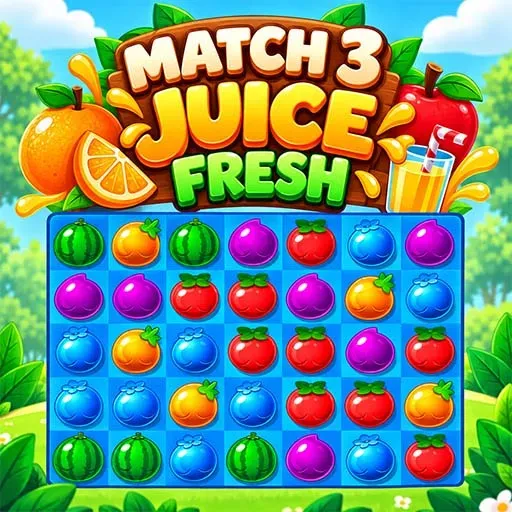
- Fruit matching games — fresh visual themes, same core mechanic, suited to players who prefer natural imagery over fantasy settings
- Tile connect matching games — connect matching tiles by drawing paths between them, different mechanic from swap-based matching but same core pattern recognition
Jewel Match Games — The Original Theme
Gems have been the default visual for match puzzle games since the beginning. The reason is not complicated.
Colored gems are visually distinct at small sizes, immediately differentiated by both color and shape, and universally recognizable across cultures and languages. A red ruby and a blue sapphire look different to every player on every device. That visual clarity is exactly what a game requiring split-second color recognition needs. No reading required. No cultural knowledge required. Gem themes work for everyone.
Jewel match puzzle games typically add more visual complexity as levels advance — more gem types, special gem variants that clear entire rows or columns, locked tiles that require multiple matches adjacent to them before they break. The visual richness of gem themes also scales well — early levels look clean and simple, later levels look like complex jeweled mosaics that require careful reading before the first move.
Triple Match and Tile Matching Games
Three of anything. Group them. Clear them.
Triple match games extend the matching mechanic beyond a grid. Items are scattered across a playing surface — sometimes stacked in layers, sometimes overlapping randomly. The player pulls matching items off the pile and groups them on a tray. When three identical items sit on the tray together, they clear. The challenge is managing the tray — it holds a limited number of items before the game ends. Pulling items in the wrong order fills the tray with items that cannot complete a triple, leaving no room for matches.
This format plays differently from swap-based match 3. The board is not fixed. Items beneath other items are hidden until the top layers clear. Forward planning requires predicting what is buried underneath and whether pulling a surface item will create a tray jam before the hidden matches become accessible.
Are match puzzle games good for the brain?
Research consistently links match-three puzzle play to improvements in pattern recognition, processing speed, and strategic planning. A University of Cambridge study found that regular engagement in visual puzzle tasks measurably improves working memory and cognitive flexibility. Match puzzle games specifically train the ability to read visual patterns quickly and plan moves based on predicted board states — both transferable cognitive skills.
Color Matching and Pair Matching Games
Not every matching game uses a grid.
Color matching games ask players to sort or group items by color across different playing fields — tubes, containers, open boards without fixed positions. The match logic stays the same — like colors together — but the spatial challenge changes because items move freely rather than sitting in fixed grid positions.
Pair matching games flip the format entirely. All items are face-down. The player flips two at a time looking for identical pairs. Memory rather than pattern recognition becomes the primary skill. Finding a pair that was seen four moves ago requires holding the visual information of previously flipped cards in working memory while continuing to scan new cards. Simple mechanic. Genuinely demanding to play well.
No Download. Opens in the Browser.
Browser opens. Grid appears. First tiles are already waiting.
No app. No installer. Works on Chrome, Firefox, Safari. Match puzzle games are among the lightest and best-optimized browser games available — clean grids, smooth animations, instant load on any device. Phone and tablet both work naturally — tapping to select and swap tiles is more intuitive on touchscreen than clicking with a mouse for most players.
Why Khelogy
No account. No download. Nothing between the player and the first match.
Open Khelogy. Pick a match puzzle game. Three in a row.
Over 1,000 free games. Loads in any browser. Works on phone, tablet, and desktop. New games added regularly.
Match three. Go again.