
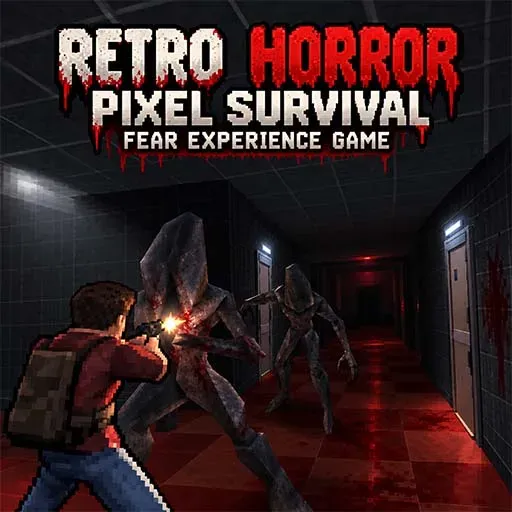
About Pixel Arcade Games
Pixel arcade games were built under constraints that forced every visual element to do more with less. A villain had to read as threatening in twelve pixels. A hero had to be read as heroic. The designers who solved those problems created a visual language that still works instantly, decades later.
Khelogy has free pixel arcade games in your browser covering pixel runners, platformers, shooters, adventure titles and 8-bit style puzzle games. No download. No account. The first sprite is already on screen.
Why Pixel Art Never Became Obsolete
The constraint produced creativity.
Early game developers worked with severe hardware limitations — a few kilobytes of memory, a handful of colors and tiles measured in eight-by-eight pixel grids. Every visual element had to communicate as much information as possible in the smallest possible space. A villain needed to be read as threatening in a twelve-pixel sprite. A hero needed to be read as heroic. The designers who solved these problems built visual languages that are still instantly readable decades later.
Research published in the journal Empirical Studies of the Arts found that pixel art triggers what researchers describe as a perceptual fluency effect — because the brain has processed similar visual styles thousands of times through gaming history, familiar pixel aesthetics are processed more quickly and more pleasantly than unfamiliar styles. That ease of processing contributes to the comfort most players feel immediately when encountering pixel art games. The visual style is work the brain has already done.
Metal Slug — The Peak of Pixel Action
Run. Shoot. Rescue prisoners. Do all three simultaneously at maximum speed.
Metal Slug was developed by Nazca Corporation and published by SNK for the Neo Geo in 1996. The game features hand-animated pixel sprites at a resolution and detail level that made contemporary developers question how it was possible. Every enemy death has a distinct animation. Every weapon produces distinct visual effects. The main character runs, climbs, rolls, and jumps with fluid pixel animation that many modern games — with budgets millions of times larger — have not surpassed in terms of expressiveness.
The run-and-gun gameplay is pure arcade design — constant forward momentum, enemies arriving from multiple directions, ammunition pickups scattered across levels, vehicles that transform the player's capabilities when entered. Two-player co-op doubles the chaos and halves the difficulty. The game has been ported to virtually every platform made since 1996 and remains actively played in 2026.
What are pixel arcade games?
Arcade games rendered in pixel art — a visual style using low-resolution graphics where individual pixels are visible and serve as the fundamental visual building blocks. The aesthetic originates from the hardware constraints of 1970s and 1980s gaming hardware and has been deliberately preserved and extended by indie developers as a creative choice rather than a technical limitation.
Free Pixel Arcade Games on Khelogy
All free. No payment. Open Khelogy, pick a pixel game, start playing.
- Pixel runner and platformer games — side-scrolling action, precise jump mechanics, collectibles and enemies across level-based pixel environments
- Pixel shooter arcade games — top-down or side-scrolling combat, pixel bullet effects, enemy waves with distinct pixel animation
- Pixel adventure arcade games — exploration-driven pixel worlds, items and upgrades found through the environment, story communicated through pixel cutscenes
- 8-bit style puzzle and skill games — retro visual design applied to modern puzzle mechanics, the pixel aesthetic and contemporary game design combined
The Indie Pixel Revival — Why New Games Look Old
Shovel Knight. Undertale. Celeste. Stardew Valley. All released after 2015. All deliberately pixel art.
The indie game development movement of the 2010s produced a wholesale return to pixel aesthetics — not because of hardware limitations but because developers recognized what the style communicates. Pixel art signals handcrafted character. Each sprite was drawn pixel by pixel. The visual style carries an implicit message about development care that photorealistic asset libraries do not produce.
Celeste — released in 2018 — uses pixel art for a precision platformer that professional game critics placed on multiple Game of the Decade lists. The pixel aesthetic was not a limitation. It was a deliberate creative choice that suited the intimate, personal tone of the game's story. Stardew Valley was created entirely by one developer over four years. Every pixel was placed individually. The result sold over twenty million copies.
Pixel art games are not retro because they are old. Many of them are newer than photorealistic games released the same year.
Chiptune — The Sound That Belongs to Pixel Games
The music is made of beeps. The beeps are perfect.
Chiptune music — composed for and produced by the sound chips of early gaming hardware — is as much a part of pixel game identity as the visual style. The NES sound chip produced audio through five channels with strict limitations on waveform types and polyphony. Composers working within those constraints created melodies that are among the most recognized pieces of music in popular culture. The Super Mario Bros. theme. The Legend of Zelda overworld. Tetris Type A.
Modern pixel arcade games use chiptune soundtracks as a deliberate choice — the sound and the visual style reinforce each other. A pixel art game with orchestral music feels inconsistent. The same game with chiptune composition feels complete. The audio aesthetic is not nostalgia bait. It is the correct design for the visual language.
Are pixel arcade games good for kids?
Most pixel arcade games suit children from around age six. The visual style is immediately accessible — pixel art characters communicate their role and threat level clearly despite low detail. Most classic pixel arcade formats — runners, platformers, shooters — use simple controls. Content varies by specific game. Classic action pixel games are generally appropriate for all ages.
8-Bit vs 16-Bit — The Visual Generations
The jump from eight to sixteen bit changed everything the eye could see. Nothing about why the games were fun.
Eight-bit games — NES, Game Boy, Atari — operate within extremely tight color palettes and low sprite resolutions. The art is iconic because the limitations forced iconography. Sixteen-bit games — SNES, Sega Genesis — allowed more colors, larger sprites, and parallax scrolling backgrounds. The visual upgrade was dramatic. The gameplay principles from eight-bit design transferred completely. The best sixteen-bit games are better looking versions of what eight-bit games had already figured out.
Modern pixel arcade games draw from both eras depending on the aesthetic goal. Eight-bit restriction is chosen for maximum minimalism and nostalgia depth. Sixteen-bit range is chosen for visual richness while preserving pixel identity. Both work. Both are clearly pixel art. The player knows immediately which era the game is referencing.
No Download. Opens in the Browser.
Browser opens. Pixel world loads. The first enemy appears in eight glorious pixels.
No app. No installer. Works on Chrome, Firefox, Safari. Pixel arcade games are among the most lightweight browser formats available — low resolution graphics, simple animation systems, minimal processing requirements. Phone, tablet, and desktop all handle pixel games without any hardware limitation. Touch controls for mobile and keyboard for desktop both suit pixel game control schemes naturally.
Why Khelogy
No account. No download. Nothing between the player and the first pixel sprite.
Open Khelogy. Pick a pixel arcade game. Eight bits is enough.
Over 1,000 free games. Loads in any browser. Works on phone, tablet, and desktop. New games are added regularly.
Pixels. Pure gameplay. Go.