



.webp)


.webp)
About Classic Arcade Games
Coin-operated video games produced from the late 1970s through the 1990s are now available in browser versions without requiring original hardware. The defining titles Pac-Man, Space Invaders, Donkey Kong, Galaga, Tetris, Frogger, and Breakout established the mechanics and design principles that modern games still follow. Browser and HTML5 versions preserve the original gameplay with no download required.
The Golden Age — What It Actually Was
1978 to 1983. Five years that defined gaming permanently. Space Invaders launched in Japan in 1978 and created a coin shortage. The Japanese government had to triple the production of 100-yen coins to keep up with demand. Pac-Man followed in 1980 and became the first game to break cultural barriers it attracted women and non-gamers to arcades that had previously been dominated by young male players. Donkey Kong arrived in 1981. It was the first game to feature Mario, then called Jumpman, and the first true platform game. Galaga, Frogger, Centipede, and Asteroids all appeared within a five-year window that established the mechanics, the vocabulary, and the visual language of video games permanently.
Every game genre that exists today traces a direct line back to something that appeared in an arcade cabinet between 1978 and 1983.
Why Classic Arcade Games Still Work?
Simple rules. Immediate challenge. Skill matters every single session. Classic arcade games were designed with a single commercial objective — keep the player engaged long enough to insert another coin. That design constraint produced games that are immediately understandable, genuinely challenging, and endlessly replayable. Pac-Man's rules fit in two sentences. The maze layout is learned in the first five minutes. Mastering the ghost AI patterns takes years. The gap between understanding the game and mastering it is the space where all the replay value lives.
Research on retro game appeal published in the journal Psychology of Aesthetics, Creativity, and the Arts found that nostalgia-triggering games produce measurable increases in social connectedness and positive affect. But nostalgia only explains returning players. Classic arcade games attract new players who have never been to an arcade, because the mechanics are genuinely excellent and the skill ceiling is genuine.
Pac-Man — The Most Recognized Game Ever Made
A yellow circle eating dots. Four ghosts with names. A thirty-three-year-old world record. Pac-Man was designed by Toru Iwatani at Namco and released in arcades in May 1980. The concept came from a pizza with one slice removed. Iwatani wanted a game that everyone could play his design deliberately avoided shooting and violence to attract a broader audience. It worked. Pac-Man generated over two billion dollars in quarters during the 1980s. The character appeared on merchandise, an animated TV series, and a pop song that reached number nine on the Billboard Hot 100 in 1982.
The perfect Pac-Man score, 3,333,360 points, requires completing all 255 levels without dying and eating every dot, fruit, and ghost possible. Billy Mitchell achieved it in 1999. The game had been out for nineteen years before anyone did it.
What are classic arcade games?
Coin-operated video games produced from the late 1970s through the 1990s are now available in browser versions without requiring original hardware. The defining titles Pac-Man, Space Invaders, Donkey Kong, Galaga, Tetris, Frogger, and Breakout established the mechanics and design principles that modern games still follow. Browser and HTML5 versions preserve the original gameplay with no download required.
Free Classic Arcade Games on Khelogy
All free. No payment. No quarters. Open Khelogy, pick a classic, start playing.
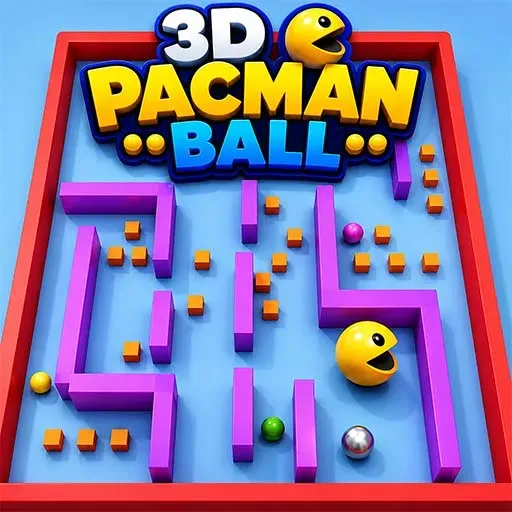
- Pac-Man style maze games — navigate the maze, collect dots, avoid ghosts, chase them with power pellets, beat the high score
- Space Invaders-style shooters — descending alien formations, laser cannon, clear each wave before the invaders reach the bottom
- Platform arcade classics — jump over obstacles, climb ladders, rescue characters, and Donkey Kong-style challenge across multiple screens
- Breakout and pinball classics — paddle control, ball physics, brick destruction, classical mechanics that defined an entire game category
Space Invaders — The Game That Changed an Economy
Rows of aliens. One cannon. They move faster as you kill them.
Space Invaders was designed by Tomohiro Nishikado and released by Taito in 1978. Nishikado built custom hardware specifically for the game because existing chips were not powerful enough to handle his vision. The alien designs came from H.G. Wells' War of the Worlds. The gameplay loop — shooting rows of descending aliens while managing the increasing speed as the formation thins — introduced the concept of escalating difficulty within a single session.
The coin shortage it created in Japan was not a rumor. Taito confirmed that the demand for 100-yen coins increased so dramatically following the game's release that the Japanese government had to respond to the supply problem. No video game before it had produced that kind of economic impact.
Donkey Kong — The First Time Mario Appeared
Donkey Kong was Shigeru Miyamoto's first game as lead designer at Nintendo. The character originally called Jumpman — later renamed Mario — had to jump over barrels thrown by a giant gorilla to rescue a woman at the top of the screen. The game introduced multi-screen level progression to arcade games. The story was told entirely through gameplay with no text or dialogue. The gorilla became one of Nintendo's most enduring characters. The plumber became the most recognized video game character in history.
Donkey Kong ran in arcades from 1981 until well into the 1990s and remains one of the most studied competitive games today — the subject of the documentary The King of Kong, which examined the world record competition around the game decades after its release.
Tetris — The Puzzle That Escaped the Arcade
Seven shapes. One grid. It never stops. Tetris was created by Soviet computer scientist Alexey Pajitnov in 1984 while working at the Soviet Academy of Sciences in Moscow. He received no royalties for the game for over a decade due to Soviet intellectual property law. The game reached Western arcades and home computers through a complicated licensing dispute that eventually landed at Nintendo, whose Game Boy version sold thirty-five million copies and made Tetris the defining handheld game of its era.
The mechanic is pure — falling shapes that must be arranged to complete horizontal lines. Lines clear. Incomplete rows stay. The stack grows. The pace increases. The game ends when the stack reaches the top. There is no winning. There is only delaying the inevitable.
No Download. Opens in the Browser.
The browser opens. Classic game loads. First life begins. No app. No installer. Works on Chrome, Firefox, and Safari. HTML5 and browser emulation technology deliver Pac-Man, Space Invaders, Tetris, and dozens of other arcade classics at full speed on any modern device. Phone and tablet work for most classic formats, touch controls adapted for mobile browsers replicate the original input faithfully.
Why Khelogy?
- No account. No download. No quarters. Just the games.
- Open Khelogy. Pick a classic arcade game. Beat the high score.
- Over 1,000 free games. Loads in any browser. Works on phone, tablet, and desktop. New games are added regularly.
- Insert coin. Begin.